📞  — free, 24/7
— free, 24/7 — free, 24/7| Package | Price per Dose | Price | |
|---|---|---|---|
| 360 pills | €0.63 | €253.47 €228.12 Free shipping | |
| 180 pills | €0.76 | €151.53 €136.37 | |
| 90 pills | €1.14 | €114.33 €102.90 | |
| 60 pills | €1.33 | €88.15 €79.34 | |
| 30 pills | €1.77 | €59.22 €53.30 | |
| 360 pills | €0.69 | €278.27 €250.44 Free shipping | |
| 120 pills | €1.04 | €139.13 €125.21 | |
| 90 pills | €1.26 | €126.73 €114.06 | |
| 60 pills | €1.51 | €100.55 €90.50 | |
| 30 pills | €1.86 | €61.98 €55.78 |
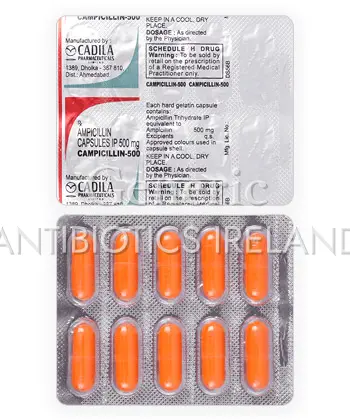
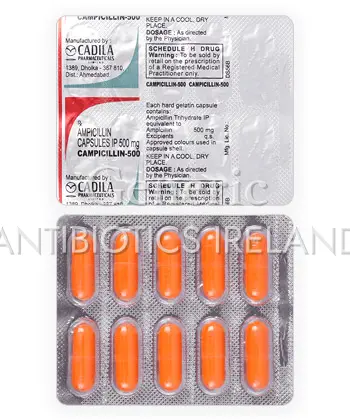
Ampicillin is a penicillin antibiotic used to treat many bacterial infections. It belongs to the beta‑lactam family and works by interrupting how bacteria build their cell wall. The medicine comes as capsules, an oral suspension, and powder for injections. It is prescribed for adults and children under careful medical guidance. Following the prescribed dose and duration helps reduce resistance and the chance of relapse.
Ampicillin binds to penicillin binding proteins on the bacterial wall. This blocks cross linking of peptidoglycans and weakens the wall, leading to bacterial death during growth. It is bactericidal against susceptible strains. The level of activity depends on timing and maintaining the right dose.
Ampicillin covers many streptococci, some enterococci, and certain Gram‑negative bacteria such as Haemophilus and Escherichia coli. However, many germs now produce beta‑lactamase enzymes that inactivate it. To handle resistant strains, doctors may add a beta‑lactamase inhibitor or choose another drug. It should not be used for organisms known to resist it.
It is used for respiratory infections like strep throat, sinusitis, and some pneumonia cases. It also treats urinary tract infections, skin and soft tissue infections, and certain gynecologic infections. In newborns and young children, it can be part of a regimen for serious sepsis when guided by a specialist.
Dose varies by age and infection. Typical adult doses range from 250 mg to 500 mg every 6 hours for mild infections, up to 1 g every 4 to 6 hours for more serious illness. Children are dosed by weight and vary with severity. It can be taken with or without food, exactly as prescribed, for a course usually lasting several days to two weeks.
Common effects include nausea, vomiting, diarrhea, and skin rash. Abdominal upset, yeast infections in the mouth or vagina, and headaches can occur. Allergic reactions range from mild rashes to life‑threatening anaphylaxis. Stop the medicine and seek help if trouble breathing or swelling of the face occurs. Long courses can cause overgrowth of resistant bacteria.
Tell your clinician about any penicillin allergy. Cross‑reactivity with other beta‑lactams is possible. Kidney impairment may require dose adjustments. Ampicillin can interact with blood thinners, and with some hormonal contraceptives. Always inform about other medicines and supplements you take. Do not use for infections caused by resistant organisms without a doctor’s guidance.
Pregnant and breastfeeding people should use ampicillin only if clearly needed, as advised by a clinician. In infants and older adults, dose and monitoring are important. Very low immune defense or recent intestinal surgery requires medical supervision. This medicine is not a substitute for vaccines or good hygiene.
Store capsules and tablets at room temperature away from moisture. Refrigerate the powder for injections after mixing, if advised by the pharmacist. Reconstituted suspension should be kept refrigerated and used within the period specified by the label. Always discard unused portions after the recommended time.
14–21 days. Free from €178.66 .
5–9 days. €26.80
−10% when paying with cryptocurrency.
−10% on all repeat orders.
All orders are packed in neutral, unbranded boxes with no product name on the outside.