📞  — free, 24/7
— free, 24/7 — free, 24/7| Package | Price per Dose | Price | |
|---|---|---|---|
| 360 pills | €0.83 | €397.76 €298.32 Free shipping | |
| 180 pills | €0.90 | €216.20 €162.15 | |
| 120 pills | €0.99 | €158.43 €118.83 | |
| 90 pills | €1.06 | €127.07 €95.31 | |
| 60 pills | €1.19 | €95.71 €71.79 | |
| 30 pills | €1.41 | €56.10 €42.08 | |
| 360 pills | €1.66 | €795.54 €596.65 Free shipping | |
| 180 pills | €1.78 | €427.47 €320.60 Free shipping | |
| 120 pills | €1.96 | €313.58 €235.19 Free shipping | |
| 90 pills | €2.08 | €249.21 €186.91 Free shipping | |
| 60 pills | €2.17 | €173.29 €129.97 | |
| 30 pills | €2.31 | €92.41 €69.31 | |
| 10 pills | €2.59 | €34.64 €25.98 |
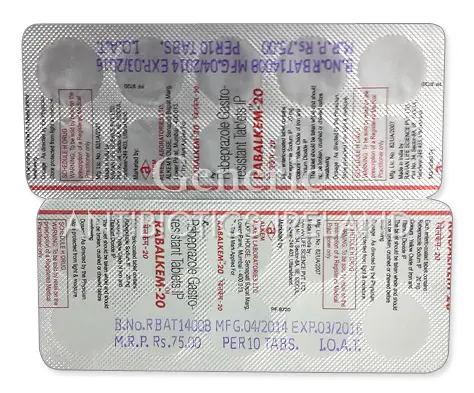
Rabeprazole is a medication commonly used to treat conditions related to excessive stomach acid. It belongs to a class of drugs known as proton pump inhibitors (PPIs). These medications work by blocking the enzyme system responsible for secreting hydrochloric acid in the stomach lining. As a result, Rabeprazole effectively reduces stomach acid levels, providing relief from symptoms such as heartburn, acid reflux, and ulcers.
Rabeprazole targets the proton pumps in the stomach's parietal cells. When these pumps are blocked, the production of gastric acid diminishes significantly. This reduction helps in healing damage caused by acid irritation. The medication is especially useful in treating gastroesophageal reflux disease (GERD), Zollinger-Ellison syndrome, and peptic ulcers. Since it acts quickly to suppress acid secretion, patients often experience symptom relief within a few days of starting therapy.
Most users report a notable decrease in symptoms after regular use of Rabeprazole. Its effectiveness in healing ulcers and eradicating H. pylori bacteria when combined with antibiotics makes it a preferred choice for many healthcare providers. The medication's long-lasting action means less frequent dosing, which can improve adherence to treatment plans. Patients appreciate its ability to provide quick relief, often within 24 hours, and help restore the normal mucosal lining of the stomach.
While Rabeprazole is generally well-tolerated, some users may experience side effects. Common issues include headache, nausea, diarrhea, or constipation. These symptoms are usually mild and temporary. However, prolonged use of PPIs like Rabeprazole may lead to vitamin B12 deficiency, hypomagnesemia, or an increased risk of bone fractures. It is important to follow the prescribed dosage and consult a healthcare provider if side effects occur or if symptoms persist.
Patients with preexisting conditions such as liver disease, osteoporosis, or those taking other medications should inform their doctor before starting Rabeprazole. It is also advisable to be cautious with long-term therapy, as it may interfere with the absorption of certain nutrients. Pregnant or breastfeeding women should seek medical advice to evaluate the benefits and potential risks. Regular monitoring might be necessary for those on extended treatment to prevent adverse effects.
Rabeprazole stands out as an effective, fast-acting medication for managing acid-related disorders. Its ability to significantly reduce stomach acid helps in alleviating discomfort and promoting mucosal healing. When used appropriately and under medical supervision, it offers a reliable solution for many people suffering from conditions caused by excess gastric acid. As with any medication, understanding its proper use and potential risks is essential for maximizing benefits and ensuring safety.
14–21 days. Free from €178.37 .
5–9 days. €26.76
−10% when paying with cryptocurrency.
−10% on all repeat orders.
All orders are packed in neutral, unbranded boxes with no product name on the outside.